
Afubra
Optimization of the shopping experience at Afubra Store
Project Summary
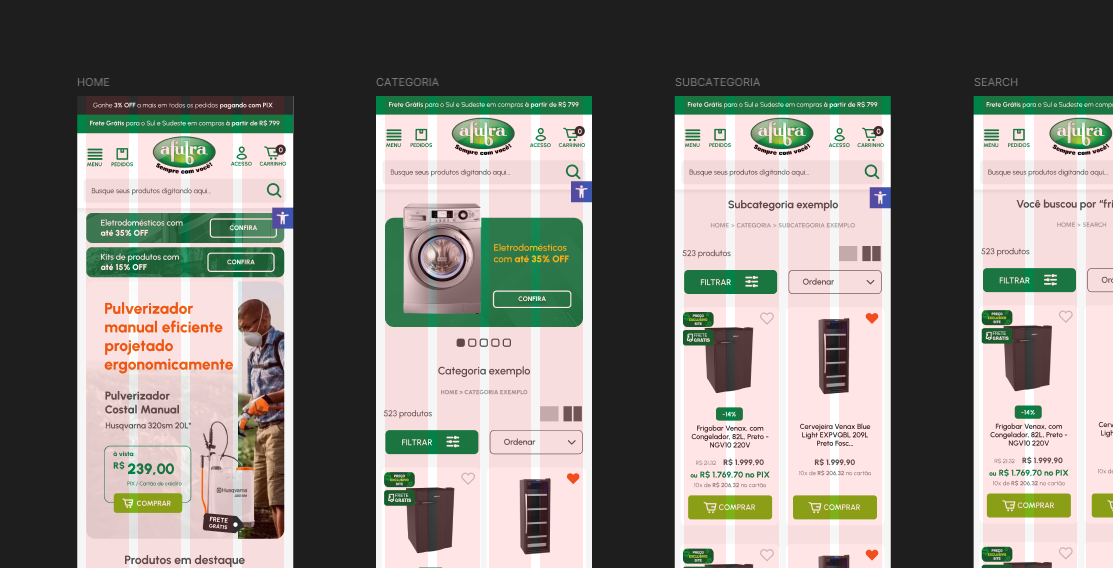
Afubra, a well-established online store in southern Brazil, aimed to improve the user experience on its e-commerce platform. The main challenge was to enhance usability, reduce cart abandonment, and increase conversion rates, ensuring a more intuitive and efficient purchasing flow. Through a comprehensive analysis of the user journey, competitor benchmarking, and qualitative and quantitative research, several opportunities for improvement were identified, focusing on design, navigation, checkout, and accessibility.
The Problem
Afubra faced significant usability challenges Despite having a loyal customer base, that directly impacted its conversion metrics. The main issues identified were:
-
Navigation and Search:Disorganized categories and an inefficient search bar made it difficult to locate products.
-
Complex Checkout Process:Excessive steps and limited payment options led to abandoned purchases.
-
Limited Accessibility:Lack of best practices for users with disabilities or visual impairments.
-
Logistical Issues:Frequent complaints about delivery delays and difficulty tracking orders..
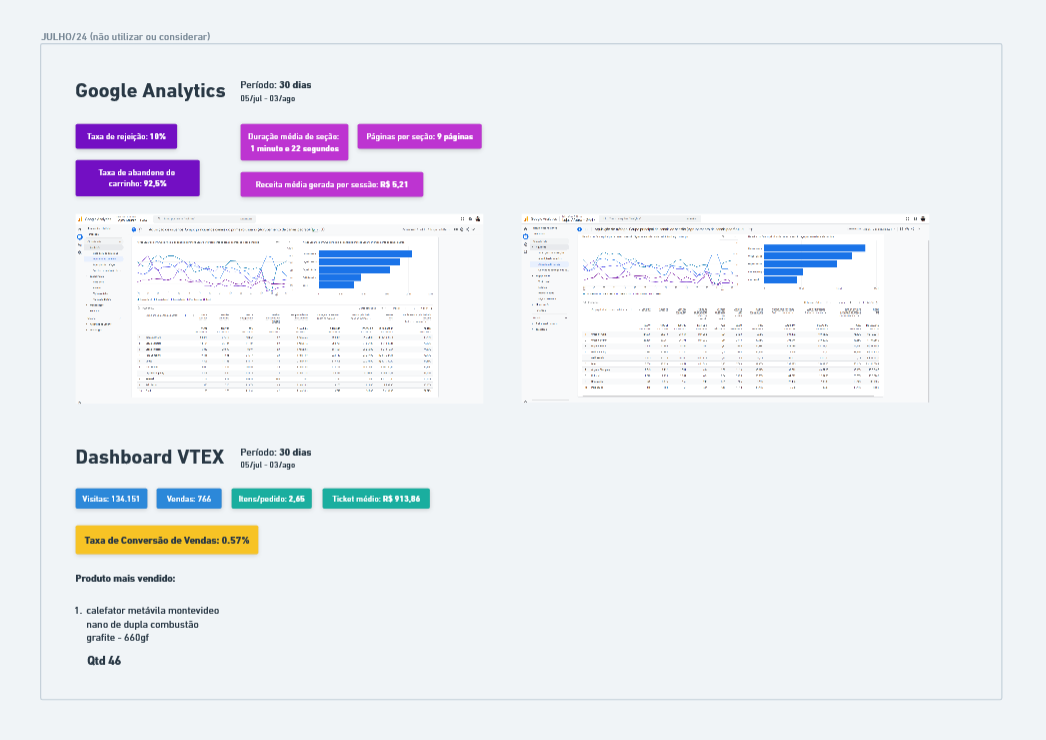
✔ Cart Abandonment Rate:: 93,4%
✔ Average Session Duration:: 0,56%
✔ Duração média da sessão1 minute and 21 seconds
Process
Research and Analysis
To understand the challenges and identify opportunities, we used several methodologies:
-
Desk Research – Analysis of e-commerce market reports and UX trends to identify consumer behavior patterns.
-
Data Analysis – Evaluation of Google Analytics metrics to map the main friction points in the purchase journey.
-
User Research Conducted a survey with Afubra customers to collect feedback on navigation, checkout and overall experience.
-
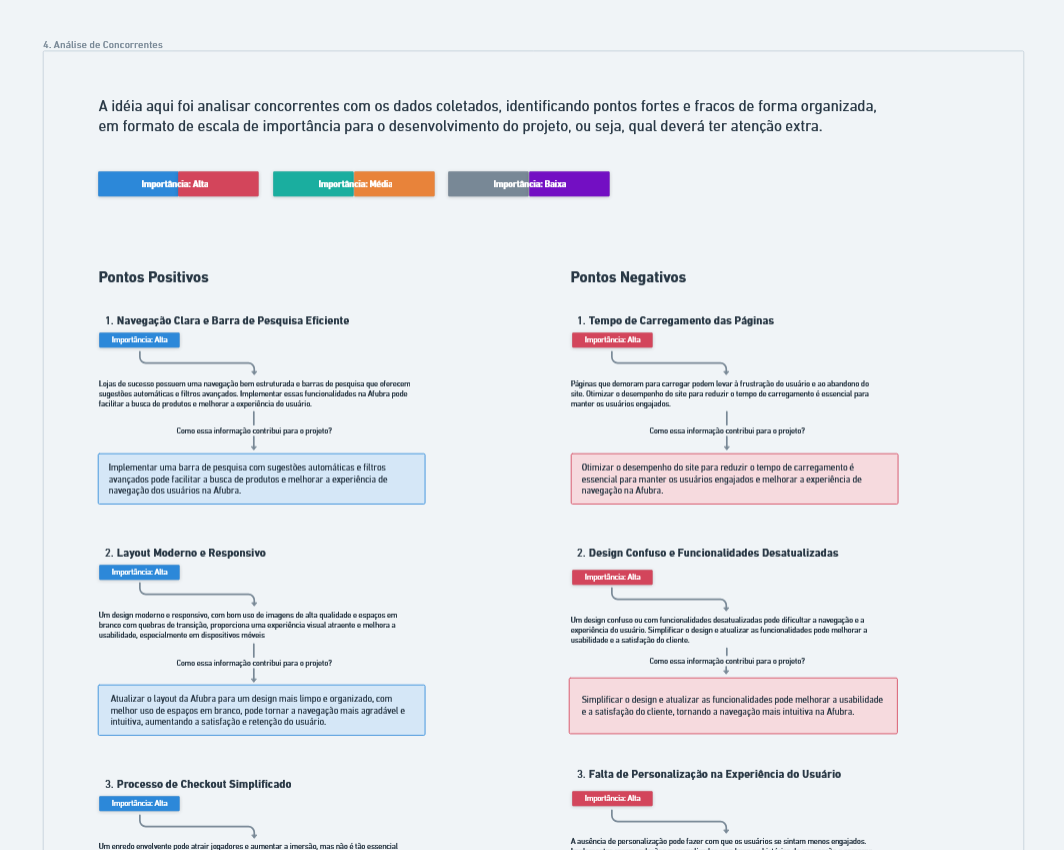
Competitive Benchmarking Analysis of direct competitors (Unilar, Colombo, Quero-Quero) and leading marketplaces (Mercado Livre and Amazonto identify best practices..
-
CSD Matrix (Certainties, Assumptions, and Doubts) Framework used to organize insights and validate hypotheses throughout the process.
Key Findings
Navigation and search need optimization → Many users reported difficulty finding products quickly..
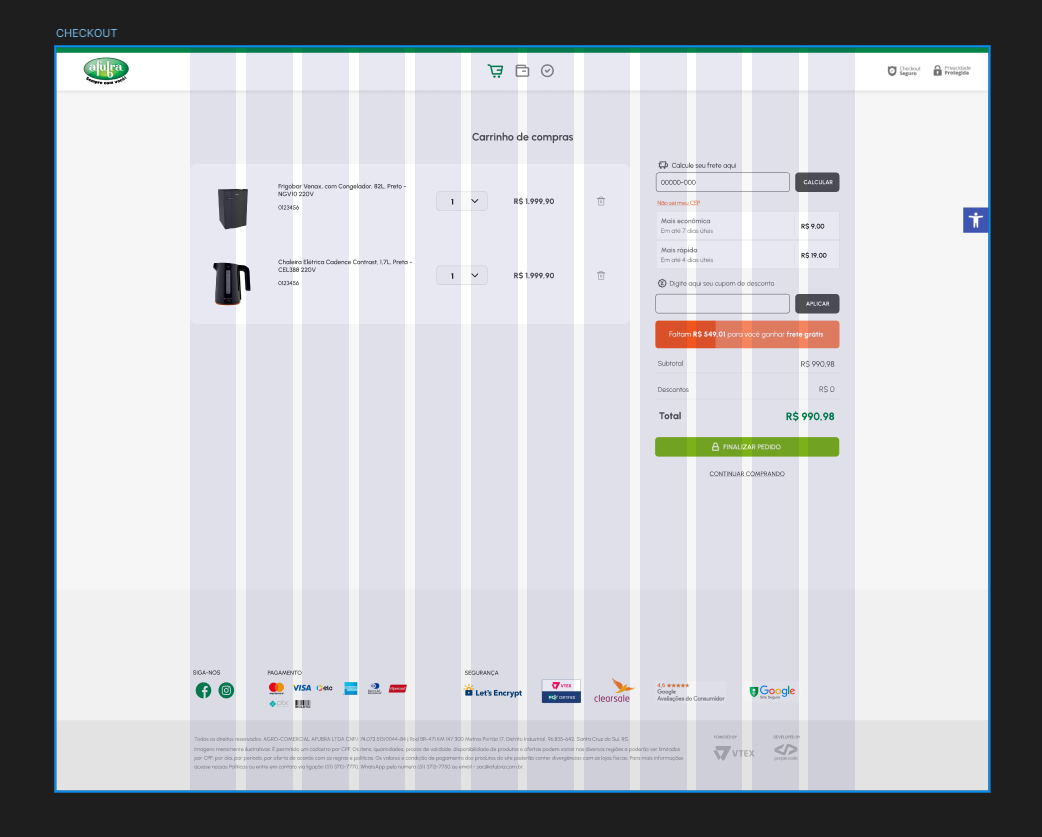
The checkout process needs simplification → Too many clicks and limited payment options made the purchasing process frustrating.
Accessibility improvements are necessary → Lack of proper contrast, keyboard navigation and alternative text for images negatively impacted the experience of users with disabilities.
Logistics impact the customer experience → Delivery time issues harmed the overall brand perception..
Implemented Solutions
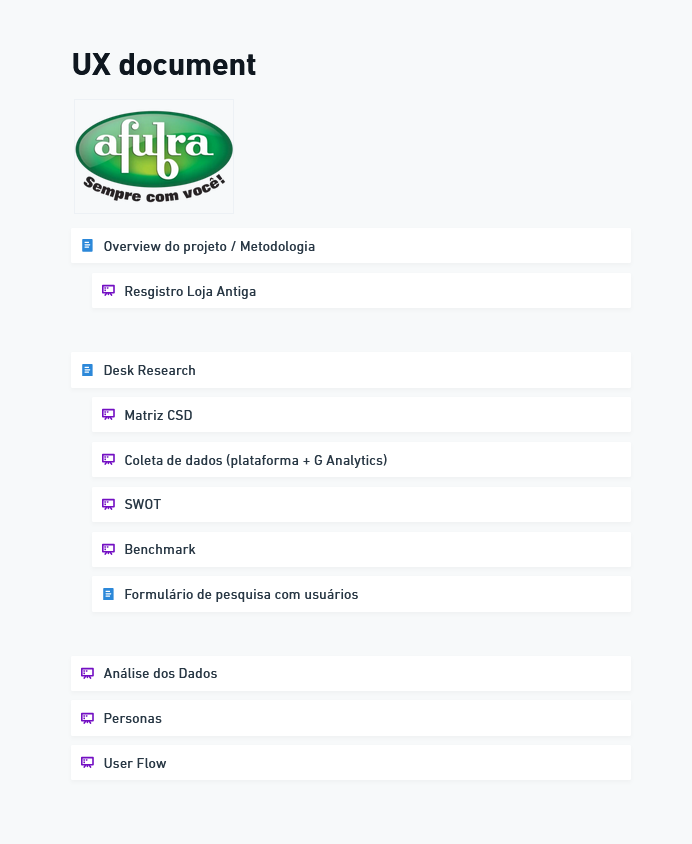
Redesigned search bar – We implemented an intelligent searchwith autocomplete suggestions and advanced filters.
Optimized checkout – We reduced the number of steps and added new payment options, including Pix and split payments across two credit cards.
Improved accessibility – We adjusted color contrast, enabled keyboard navigation and added alternative text for images.
Logistics improvements – We improved communication with delivery partners and increased order tracking transparency.
Results
After implementing the improvements, the following impacts were observed:
23% increase in conversion rate → A smoother checkout experience led to more completed purchases.
19% reduction in cart abandonment rate → The new purchase flow proved to be more efficient and engaging.
35% growth in average session duration → Improved navigation encouraged users to explore more products.
Pix adoption increased by 40% → The new payment option addressed a growing market demand.
Conclusion and Key Learnings
Key takeaways from this project:
-
User research is essential → Continuous validation of changes ensures that solutions address real user needs.
-
A simplified purchase flow increases conversions → The simpler and faster the checkout process, the higher the conversion rates.
-
Accessibility is a competitive advantage → Implementing best practices benefits all users, not just those with disabilities.
This project reinforced the idea that a smooth and efficient shopping experience not only improves conversion rates but also strengthens long-term brand loyalty.